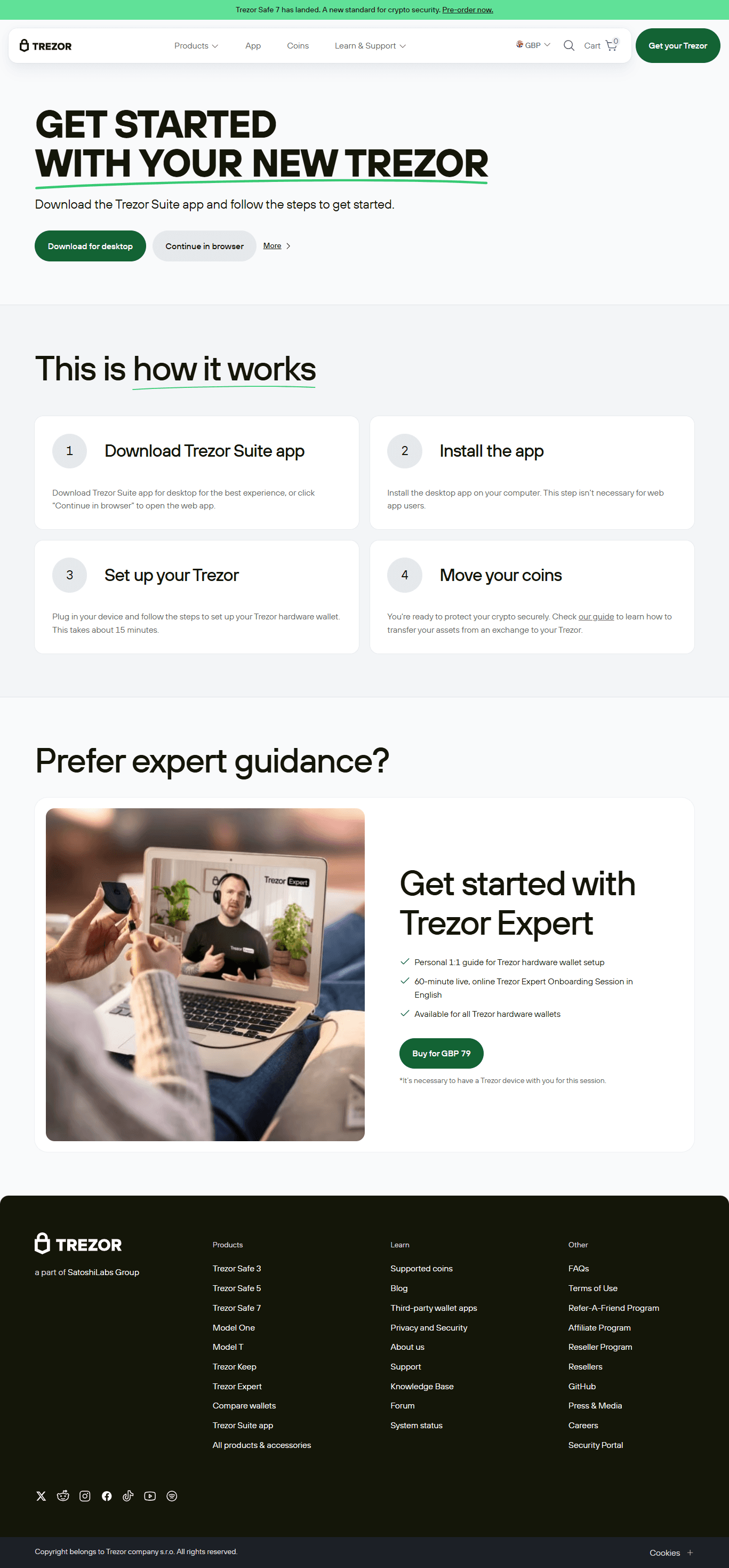
Trezor Login: Accessing Your Hardware Wallet Safely
Managing cryptocurrency securely begins with accessing your Trezor wallet through the official interfaces. Trezor Login is the process that allows users to securely connect to their Trezor device via Trezor Suite or compatible applications while maintaining the highest security standards.
This guide explores what Trezor Login is, how it works, best practices, and why proper login procedures are critical for cryptocurrency security.
What Is Trezor Login?
Trezor Login is the process of authenticating your Trezor hardware wallet to access its features through official software like Trezor Suite or supported web applications.
Unlike traditional online logins that use usernames and passwords, Trezor Login relies on physical device verification and PIN authentication, ensuring that private keys remain offline at all times.
Why Trezor Login Is Different from Regular Logins
Cryptocurrency wallets require a different approach to login:
Hardware-based authentication: Private keys never leave the device.
PIN verification: Adds a layer of physical security against unauthorized access.
No online password storage: Your credentials are never stored on a server.
Recovery seed integration: Login is tied to device ownership and recovery information.
This method ensures that even if your computer is compromised, hackers cannot access your funds without the physical Trezor device.
Supported Platforms for Trezor Login
You can access your Trezor wallet securely via:
Trezor Suite (desktop and mobile) – the official application for account management, transactions, and firmware updates.
Trezor Web Wallets – select web-based platforms that support Trezor hardware authentication.
Third-party wallets – only verified apps that support Trezor login protocols.
Always ensure that you use official or verified platforms to prevent phishing and malware attacks.
Step-by-Step Trezor Login Process
Logging into your Trezor wallet involves a series of secure steps:
Connect Your Device: Plug your Trezor hardware wallet into your computer or mobile device.
Launch Official Software: Open Trezor Suite or a verified application.
Enter Your PIN: Confirm physical access with the device PIN.
Verify Device Authenticity: Some platforms may prompt you to confirm that your Trezor device is genuine.
Access Your Wallet: Once authenticated, you can manage assets, view balances, and sign transactions.
This process ensures that all sensitive operations remain offline and under your control.
PIN Security During Trezor Login
The PIN is a critical component of Trezor Login. It protects the device from unauthorized access even if the hardware is physically lost or stolen.
Best Practices:
Use a unique, non-obvious PIN
Never share the PIN with anyone
Avoid recording the PIN digitally
Remember that repeated incorrect entries can temporarily lock or wipe the device
The PIN works in tandem with the recovery seed to maintain full wallet security.
Recovery Seed and Login
Your recovery seed is the ultimate backup for Trezor Login. If your device is lost, damaged, or stolen, you can restore wallet access using the recovery seed on a new device.
Important Notes:
The seed should be written on paper and stored securely
Never enter the seed into a computer or phone
Confirm the seed during wallet setup to avoid future login issues
Trezor Login depends on physical device access and the recovery seed as a backup.
Using Trezor Login for Transactions
Once logged in, all transactions must be approved on the device itself, not just the software interface.
Benefits of device-based approval:
Protects against malware on computers or mobile devices
Confirms recipient addresses, amounts, and fees
Keeps private keys offline
This ensures that logging in does not compromise the security of your assets.
Two-Factor Authentication with Trezor
While Trezor Login itself is secure, some platforms allow additional two-factor authentication (2FA) for extra protection.
Common 2FA methods include:
Time-based One-Time Passwords (TOTP)
Email or mobile verification codes
Hardware key verification in enterprise settings
This adds a secondary layer of security for sensitive transactions and login verification.
Common Login Issues and Troubleshooting
Even with secure procedures, users may encounter login challenges:
Device not recognized: Check the USB connection, try a different cable, or restart Trezor Suite.
Forgot PIN: Use the recovery seed to restore wallet access on a new device.
Firmware warnings: Update the device via Trezor Suite to ensure compatibility.
Browser compatibility issues: Ensure you use updated browsers if accessing web-based login interfaces.
Following official guides ensures safe and reliable login.
Security Tips for Trezor Login
Always use official software like Trezor Suite or verified web apps.
Never share your recovery seed or PIN online.
Keep your hardware wallet offline except when performing secure transactions.
Verify device authenticity whenever prompted.
Regularly update firmware to maintain security.
These best practices reduce the risk of unauthorized access and ensure secure login.
Trezor Login for Businesses and Multi-User Access
Organizations using Trezor devices for treasury management or multi-user wallets also rely on secure login protocols:
Multi-user approvals for transactions
Hardware-based authentication for each user
Enterprise-grade monitoring and logging
Recovery seed protocols for organizational continuity
Trezor Login ensures that corporate assets remain secure while allowing multiple authorized users to access funds safely.
Conclusion
Trezor Login is more than just access—it’s a secure authentication process designed around hardware-level security, offline key storage, and PIN verification. By following official login procedures, using verified platforms, and implementing best practices, users maintain full control over their cryptocurrency.
Whether for personal wallets or organizational use, Trezor Login ensures security, privacy, and confidence in managing digital assets.